
Belize immigration & customs declaration
What Is the Belize Immigration Form?
A plain guide to the online Belize travel declaration: what it replaced, why it merges immigration and customs, who must complete it and how the QR code works.
The Belize immigration form is the online immigration and customs declaration that travellers now submit before they reach the country. It is also known as the Belize Travel Declaration or the iDeclare form, and it replaced the paper arrival and departure cards that cabin crew used to hand out on the descent into Belize City.
The short version: Belize has moved its arrival paperwork online. One digital declaration now covers both immigration and customs, it is filed within the 72 hours before you travel, and it produces a QR code that officers scan on arrival. It is a declaration, not a visa.
The form in one sentence
The Belize immigration form is an online declaration filed on the official government
portal at belizetravel.immigration.gov.bz, in which a traveller states who they are, why
they are coming, how long they intend to stay, where they will sleep, and what they are
carrying into the country.
It is processed by Belize Immigration — the Department of Border Management and Immigration Services — together with the customs authorities. You complete it yourself, on a phone or a laptop, before you board, and the output is a digital confirmation with a QR code.
The wording matters because travellers often search for a "Belize visa form" or a "Belize landing card". Those are different things. This is a declaration: a statement of facts you make in advance so that the border check itself is faster.
In brief: it is an online statement of identity, trip details and goods carried, filed before arrival on the official Belize government portal.
What it replaced
Anyone who visited Belize before December 2024 remembers the routine. Somewhere over the Caribbean the crew distributed two small cards — an immigration card and a separate customs declaration — filled in with a borrowed pen on a wobbly tray table.
That paper system is gone. The information is the same in substance, but it is captured before departure rather than in the last forty minutes of the flight:
- No more illegible handwriting, and no more forms rejected for a smudged date.
- No dependence on the crew having enough cards on board.
- Families can complete everything calmly at home instead of in a cramped seat.
- Officers see a structured record on screen rather than a card they have to decipher.
- The traveller keeps a copy: the confirmation lives in an inbox, not in a seat pocket.
In brief: the online declaration replaced the paper embarkation and disembarkation cards that used to be distributed on board.
The defining feature: immigration and customs together
The distinctive characteristic of the Belize system is that a single form covers both immigration and customs. Most countries that digitised arrival paperwork digitised only the immigration half, leaving customs on paper. Belize merged them.
That is why the form asks two very different kinds of question in one sitting: passport and travel questions on one side, goods questions on the other — currency above the reporting threshold, food and agricultural products, commercial samples, restricted items.
| Old paper process | Current online process |
|---|---|
| Immigration card handed out on board | Immigration section of the online declaration |
| Separate customs card at baggage claim | Customs section of the same declaration |
| Two documents, two queues, two checks | One submission, one QR code |
| Completed in flight | Completed before travel, within a 72-hour window |
| No copy kept by the traveller | Digital confirmation stored on your phone |
Good to know: because customs is part of the same form, answering the goods questions carelessly is not a minor slip. The customs half carries the same legal weight as the rest.
In brief: one declaration, two functions — the merger of immigration and customs is the system's defining trait.
Who has to submit it
The declaration applies broadly. In practice, plan on filing it if you fall into any of these groups:
- Visitors and tourists of any nationality arriving in Belize, including cruise passengers.
- Returning residents and nationals, who also complete a declaration.
- Business travellers, including short technical visits.
- Travellers arriving overland from Mexico or Guatemala, not only by air.
- Travellers leaving Belize, who file the departure version of the declaration.
Children are included: each traveller needs their own record, even if one adult types them all. If your case is unusual — diplomatic travel, crew, medical evacuation, a same-day land crossing for shopping — check the portal rather than assuming.
In brief: essentially every traveller crossing a Belize border, in either direction, whether by air, land or sea.
When it came into force
The rollout happened in two stages:
- 1 December 2024 — the online declaration went live at the Philip S. W. Goldson International Airport (PGIA / BZE), the country's main air gateway near Belize City.
- 1 January 2025 — the requirement was extended to all ports of entry, which brought in the land borders with Mexico and Guatemala and the maritime entry points.
That two-step rollout is why forum posts and printed guidebooks still describe paper cards as if they were in use. Anything written before late 2024 is out of date on this point.
In brief: airport first in December 2024, every port of entry from January 2025.
The 72-hour window
The declaration is not something to tick off months in advance. It opens in the 72 hours before your arrival in Belize, and the portal will not accept a submission made well outside that window.
The logic is straightforward: the form asks for details that are only reliable close to departure — the actual flight, the hotel you actually booked, what you are actually carrying. A declaration filed six weeks early would be a set of guesses. Practical timing advice:
- Put a reminder in your calendar for three days before departure.
- File it once your flights are confirmed and your first night's accommodation is booked.
- Do not leave it to the airport: connectivity, queues and stress are a bad combination.
- With a long connection, the window runs against arrival in Belize, not against leaving home.

In brief: file within the three days before arrival — earlier submissions are not accepted.
The QR code
When the declaration is submitted successfully, the system issues a confirmation containing a QR code. That code is the working document. It is what immigration and customs officers scan when you reach the border.
- Save the confirmation to your phone and take a screenshot as a backup.
- Print a copy as well. Batteries die, and a printed sheet never asks for a signal.
- Keep it with your passport rather than buried in an email thread.
- If several people are travelling together, keep track of whose code is whose.
The QR code does not replace your passport, and scanning it does not by itself grant entry: it simply retrieves the declaration you already made. Our guide to the Belize declaration QR code covers it in more detail.
In brief: the submission produces a scannable QR code — save it, print it and keep it with your passport.
It is not a visa
This is the single most common misunderstanding, so it deserves its own section. The Belize immigration form is not a visa and it is not a travel authorisation in the sense of an ESTA or an ETA. Filing it does not grant permission to enter Belize, and being visa-exempt does not exempt you from filing it. They are two independent things.
Belize is generously open in visa terms. Most travellers from the United States, Canada, the United Kingdom and the European Union may enter without a visa for stays of up to 30 days. In addition to a declaration, the border check normally involves:
- A passport valid for the trip — six months of remaining validity is the prudent standard.
- An onward or return ticket dated within the permitted stay.
- Evidence of sufficient funds. Secondary sources quote figures on the order of 75 USD per day; treat that as an indication, not an official threshold.
- A credible answer about where you will stay and what you will be doing.
Nationalities outside the visa-exempt list need a visa obtained separately and in advance, and the declaration on top of it. See Belize entry requirements and visa-free travel.
Good to know: stay lengths, fees and funds vary by nationality and route and shift over time. Treat every number here as an order of magnitude and confirm the current rules on the official portal before booking anything expensive.
In brief: the declaration and the right to enter are separate matters — you may well need both.
What happens if you arrive without one
Turning up at a Belize border with no declaration is not a catastrophe, but it is an avoidable delay. Realistically, expect one of the following:
- You are directed to complete it on the spot, which means finding connectivity and filling the form under pressure after losing your place in the queue.
- You are held to one side while it is sorted out — uncomfortable with children in tow or a connecting flight to a caye.
- The airline raises it at check-in, turning a border problem into a departure problem.
A far worse outcome is an inaccurate declaration: a rushed customs answer, a passport number with a transposed digit, a blank accommodation field. Errors invite scrutiny in a way that a missing form does not. The most common Belize declaration mistakes are almost all avoidable in five minutes of care.
In brief: arriving without a declaration means delay and improvisation — and a sloppy declaration is worse than a late one.
Arrival and departure are two declarations
The system covers both directions of travel. There is an arrival declaration and a departure declaration, and completing the first does not complete the second. Travellers who filed carefully on the way in are the ones most often caught out on the way home.
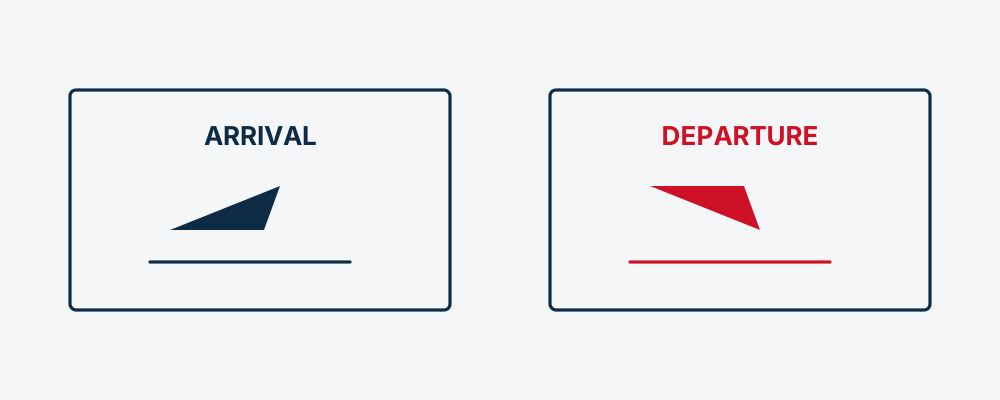
Plan the return leg the same way: three days before you fly home, file the departure version. See Belize arrival and departure forms for the differences between the two.
In brief: file one declaration on the way in and another on the way out.
Key points
- The Belize immigration form is an online immigration and customs declaration filed on the official government portal before you travel.
- It replaced the paper arrival and departure cards handed out on board.
- Its defining feature is that it merges immigration and customs into one submission.
- It went live at PGIA in December 2024 and at all ports of entry from January 2025.
- It opens in the 72 hours before arrival and produces a QR code for the border check.
- It is not a visa: many nationalities enter visa-free for up to 30 days and still file it.
FAQ about the Belize immigration form
Is the Belize immigration form the same as the iDeclare form?
Yes. The online immigration and customs declaration is referred to variously as the Belize Travel Declaration, the Belize immigration form and iDeclare. Different names, same submission on the same official portal.
Do I still fill in a paper card on the plane?
No. The paper embarkation and disembarkation cards were discontinued when the online system rolled out. Crew no longer distribute them, so do not count on being able to complete one in flight.
Does the declaration replace my passport?
No. It is an additional record, not a travel document. You still present a valid passport at the border, and the officer still checks it in the usual way.
Can I file it a month before my trip?
No. Submissions open in the 72 hours before arrival in Belize. The portal is designed around that window, so a very early attempt will simply not go through.
Is there a government fee for the declaration itself?
Filing on the official portal is the government process, and any charge that applies is set by the authorities. Separate travel taxes and border fees exist and are a different matter. Confirm current amounts on the official portal.
Do children need their own declaration?
Yes, each traveller needs a record, including minors. In practice an adult completes them for the family, but a child's details must appear rather than being folded into a parent's entry.
Does it apply at the land borders with Mexico and Guatemala?
Yes. Since January 2025 the requirement covers all ports of entry, including the crossings at Santa Elena and Benque Viejo del Carmen, not only the international airport.
What if my flight is delayed or changed after I file?
If the trip details you declared no longer match reality, the declaration should reflect the journey you actually make. Check the portal for how to update or resubmit, and allow time before you reach the border.
Is a visa-free traveller exempt from the declaration?
No. Visa policy and the declaration are unrelated. Travellers from the United States, Canada, the United Kingdom and the European Union who enter without a visa still complete the form.
How long can I stay in Belize as a tourist?
Many visa-exempt nationalities are admitted for up to 30 days on arrival, with extensions handled separately inside the country. The exact period is at the officer's discretion, so confirm the current policy before booking a longer trip.
Last updated: July 2026. Entry rules change; always confirm current requirements on the official Belize Immigration portal before you travel.